01
Financial events need a clear record
Define the transaction lifecycle, retries, reversals and reconciliation before implementing the interface. Duplicated or delayed events need an explicit handling policy.
Industries — Fintech
Build financial workflows with explicit rules for data, access and review. We scope the software with your domain specialists and use testing, traceability and reconciliation to make its behaviour inspectable.
The stakes
01
Define the transaction lifecycle, retries, reversals and reconciliation before implementing the interface. Duplicated or delayed events need an explicit handling policy.
02
Identify user roles and the data each needs. Scope access logging, credential handling, review and offboarding with the business's security owner.
03
For extraction and summarisation, validate structured fields and route uncertain results to a person. Do not present generated suggestions as confirmed financial facts.
Relevant services
Case study
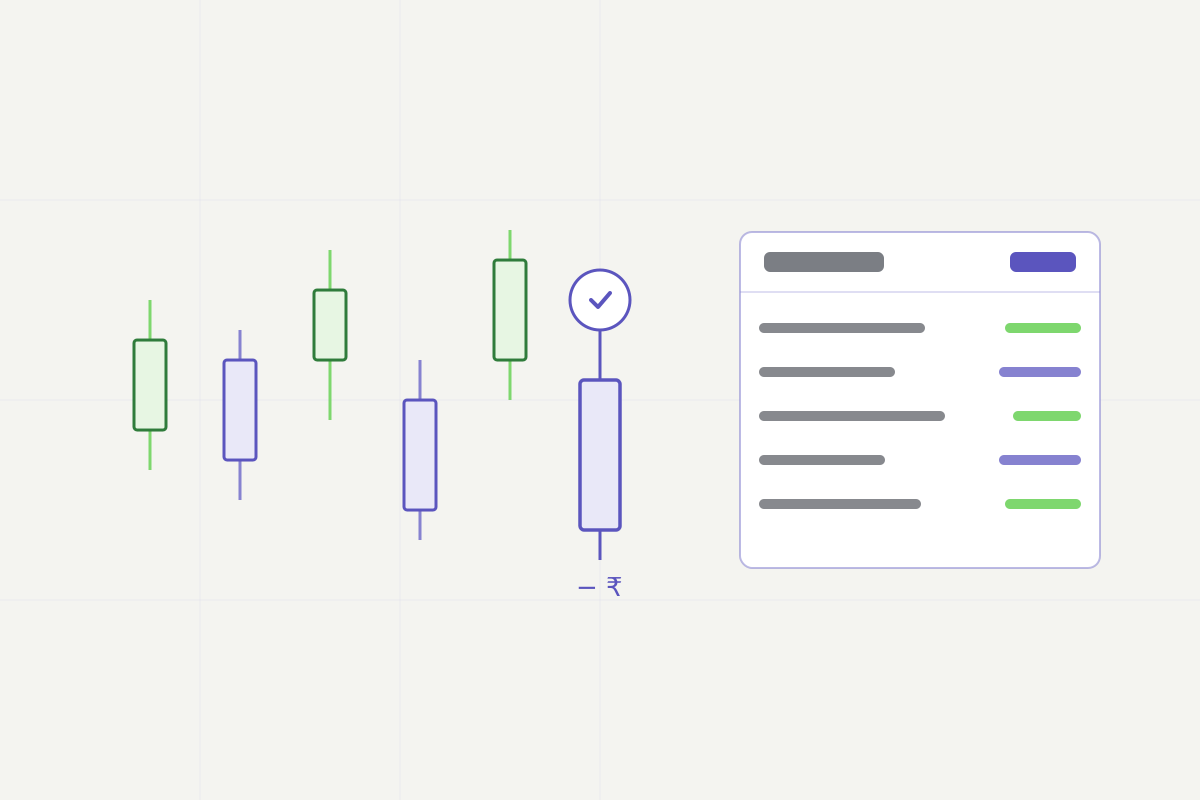
For a trading-journal product, we built the AI that reads a broker screenshot into a clean, reviewable ledger — flagging anything the model is unsure about for a human to confirm, and pricing each tagged mistake in rupees.
Browse all case studiesFAQ
The questions fintech buyers actually ask us — answered the way we’d answer them on a call.
Our published pnlbook case study describes a trading journal for Indian users, including broker screenshot extraction, review and a ledger-based coaching workflow. It describes product functionality, not investment returns.
No. The engagement covers the agreed software scope. Your authorised specialists determine the approvals and legal obligations that apply to the business. Any independent assessment is scoped separately.
Agree the minimum data and access needed for the work. Prefer masked or synthetic development data, named accounts and time-limited permissions. The proposal should identify who grants access and how it is revoked.
We can review the architecture, integrations and release process before proposing changes. Critical workflows need suitable test data and review by someone who understands the financial rules.
Share the requirements and vendor-review process during discovery. We will identify what the project includes, what evidence can be provided and where specialist or independent review is required.
Tell us what you're building in fintech. We'll reply within one business day with an honest read on whether we can help.